Turn research materials into a conclusion
Keep sources, reasoning, and drafts together as research develops into a useful recommendation.
On this page
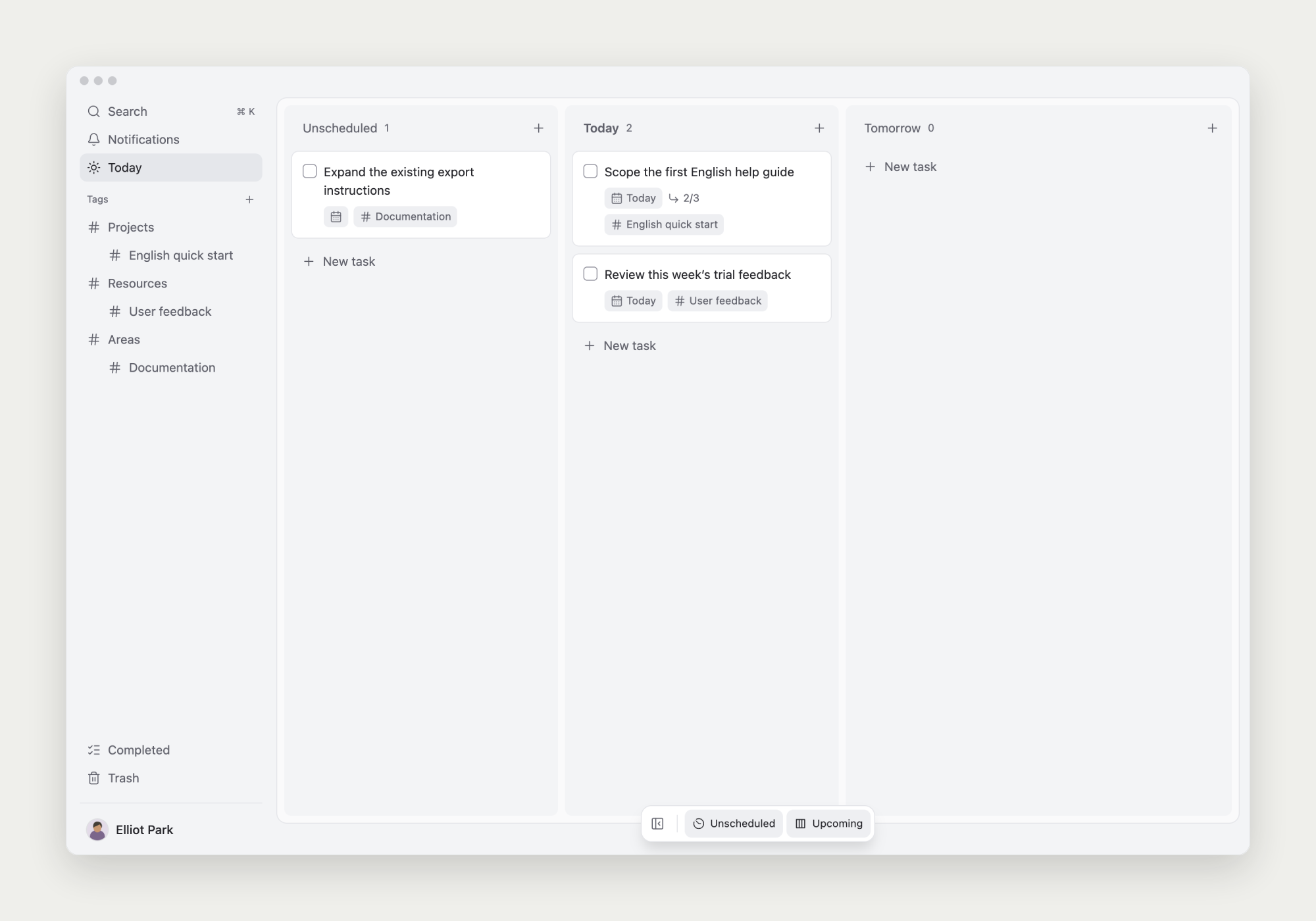
Define the question first
Create a task with an output, such as ‘Assess an English quick-start guide pilot’. State the decision, evidence needed, and deliverable at the top of its note.
Set a start date and add a due date for a review or delivery commitment.
Collect sources and explain what they show
Add interview excerpts, feedback, and source links. Beside each, write which judgment it supports and what remains uncertain.
Insert images or attach files as needed. Keep source quotations distinct from your own inferences.
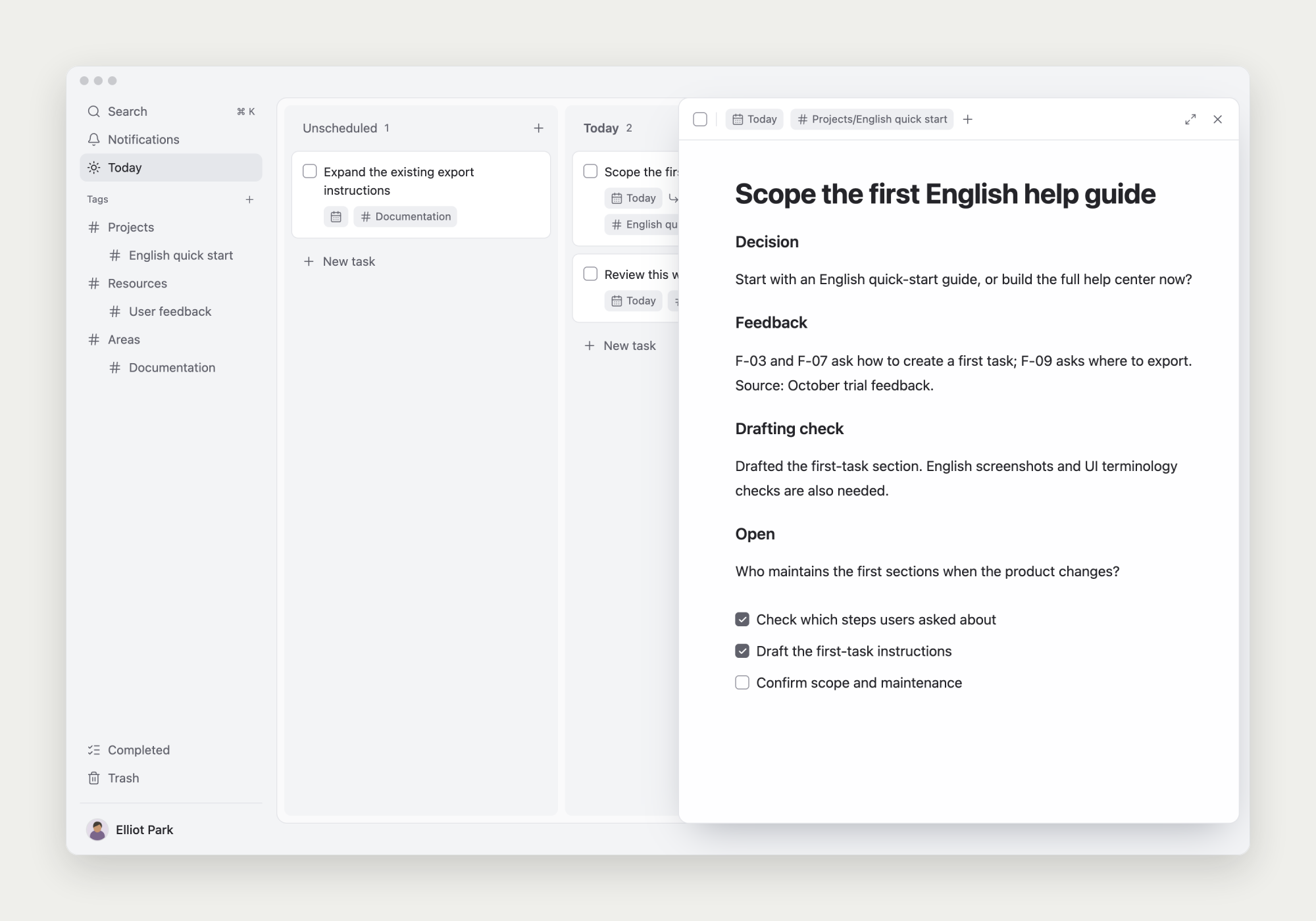
Organize a draft around the question
Use headings for Question, Evidence, Recommendation, and Further validation. Give the conclusion you can support now, followed by its evidence.
Create dated subtasks for more interviews, data checks, or a pilot draft.
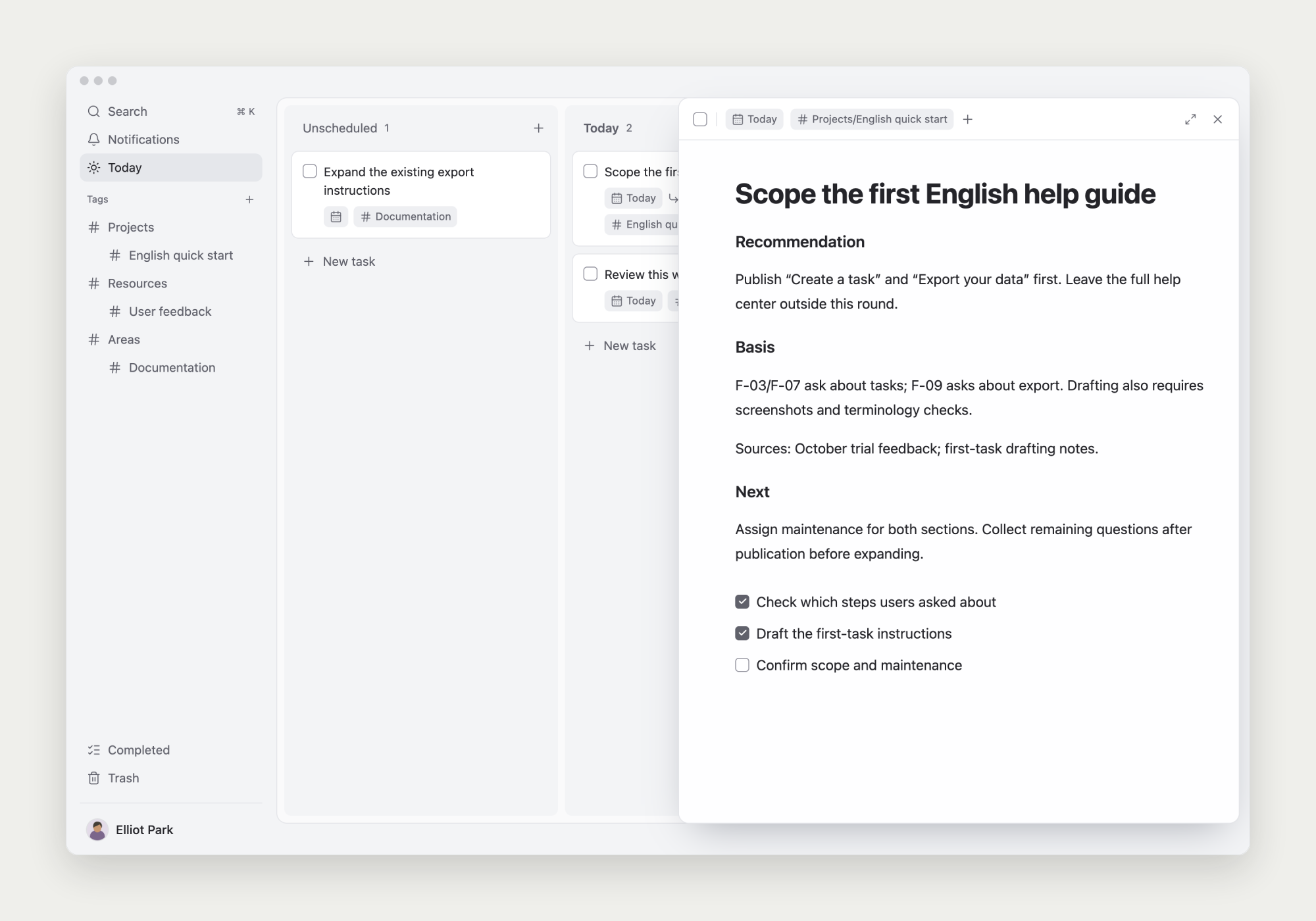
Keep the conclusion and its limits
Record the final recommendation, delivery link, and remaining uncertainty. Complete the task and add a topic tag such as ‘User research’.
When reusing it, check whether the original conditions still apply before relying on the conclusion.