To break down a task, define its deliverable, identify smaller outputs you can check separately, and work out which steps depend on others. Stop splitting when you know how to start a step, how to recognize its completion, and how to schedule or adjust it. Split further when execution reveals a new obstacle.
“Prepare the online talk” captures a commitment without necessarily telling you where to begin today. Useful subtasks supply that starting point while keeping each step connected to the final delivery.
Define the delivery before listing activities
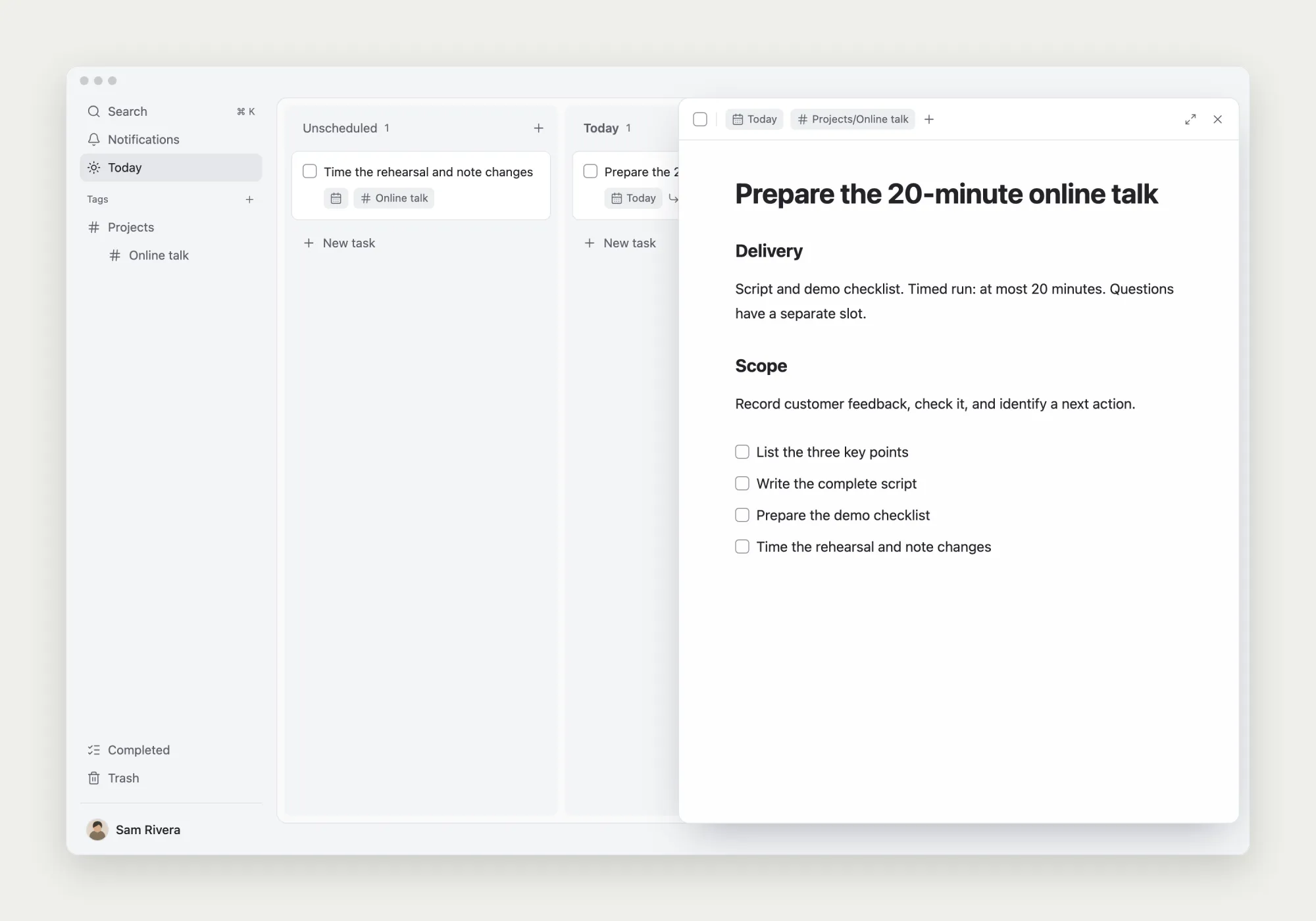
Consider a twenty-minute internal talk about recording customer feedback. It needs a complete script, a demo checklist, and a timed rehearsal confirming that the material fits twenty minutes. Questions are scheduled separately.
Keep that scope in the parent task’s TodoNote note. Limit the topic to recording feedback, checking it, and identifying a next action, rather than explaining the whole support process. The boundary helps you decide whether a new idea belongs in this talk.
Split by an observable output
For this example, list four outputs: three key points, a complete script, a demo checklist, and rehearsal notes with revisions. Those numbers describe this talk’s plan; they do not prescribe how many subtasks every project needs.
| Wording | What is missing | A more useful next step |
|---|---|---|
| Prepare the talk | Scope and starting point | List the three points this talk will cover |
| Research, discuss, improve | A checkable result | Write a script you can deliver from start to finish |
| Open the document, type a title | Steps are too fragmented to scan | Keep continuous writing in one output-based task |
| Slides finished means done | Demo and delivery checks | Prepare the demo checklist and time a rehearsal |
A short task title can point to a note with scope and a completion condition. The script should cover the chosen points; the checklist should identify the entry point, action, and expected result. Checking progress then means more than confirming that an activity happened.
How small should a subtask be?
Ask three questions: Can I open this and know where to start? Will there be a result I can inspect? Can I adjust this step independently if progress changes? If an answer is unclear, add context or split the work again.
If “prepare the demo” is still vague, start by listing the path for demonstrating a feedback record, then prepare the materials it needs. Individual clicks belong in the demo checklist when they are details of one continuous operation, rather than separate calendar commitments.
Choose size according to uncertainty and checking needs. Tasks do not all need the same number of minutes. Familiar continuous work can stay together; a test or a wait for information often deserves its own step so you can adjust the plan.
Check dependencies before assigning dates
Choose the key points before writing the script. Get the script and demo materials ready enough to use before rehearsing. Schedule the work you can advance now and reserve time for what follows.
Use the parent task to retain the overall delivery and subtasks to record results and planned starts in TodoNote. Add a due date when there is a real deadline. If an earlier step slips, reconsider the later steps instead of moving every date together without checking the effect.
Check completion against what execution reveals
The first rehearsal in this example takes twenty-four minutes. The script exists, but the talk is not ready for its twenty-minute slot. The rehearsal note records repeated background to remove, the core demo to retain, and a second timed run to perform.
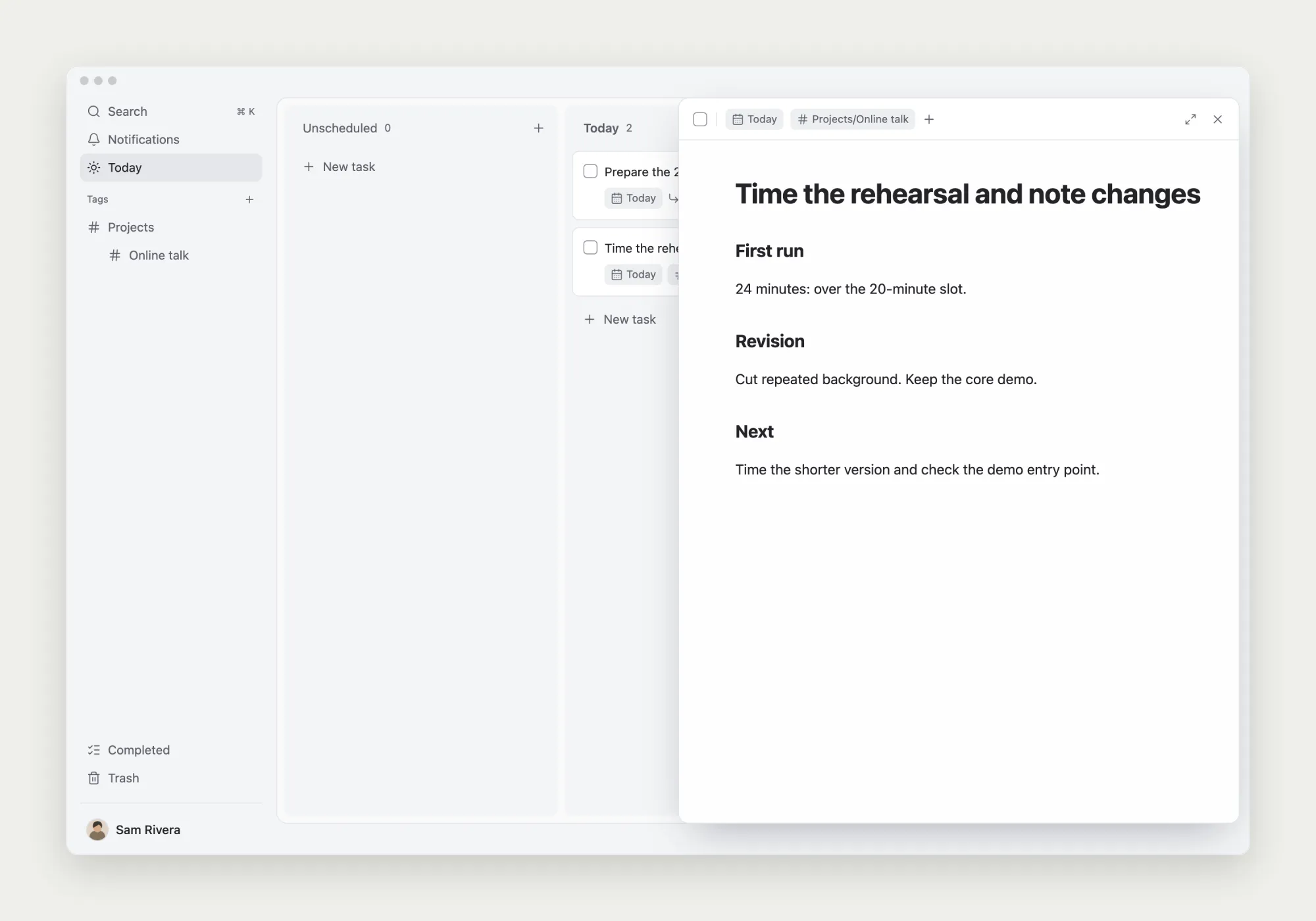
Finish this step after the revised run meets the scope and timing and the demo entry point has been checked. Keeping the result with the subtask helps distinguish excess content, a difficult demo, and a delivery scope that needs changing.
A breakdown is a plan you update as you work. Add a subtask when a question needs its own check and remove steps that no longer serve the delivery. Judge the parent against its promised outcome, rather than only the number of boxes checked.
Start with one commitment you need to advance
Write one sentence describing the output, then name the next step and its completion condition. Execute it and check what remains unclear. You can refine future work as it becomes relevant.
Further reading: Asana’s work breakdown structure guide describes organizing project scope around deliverables. This article focuses on the size of individual execution steps; a larger shared project also needs explicit team scope, responsibilities, and acceptance arrangements.