Build a small event checklist backward from the event date. Separate registration prerequisites, advance preparation, on-site execution, and follow-up. Give each task a checkable outcome, needed inputs, and a contact where relevant.
A day-of checklist alone can miss approved registration details, speaker materials, and unanswered questions afterward. Cover the full process while making each stage easy to scan.
Confirm what makes the event possible
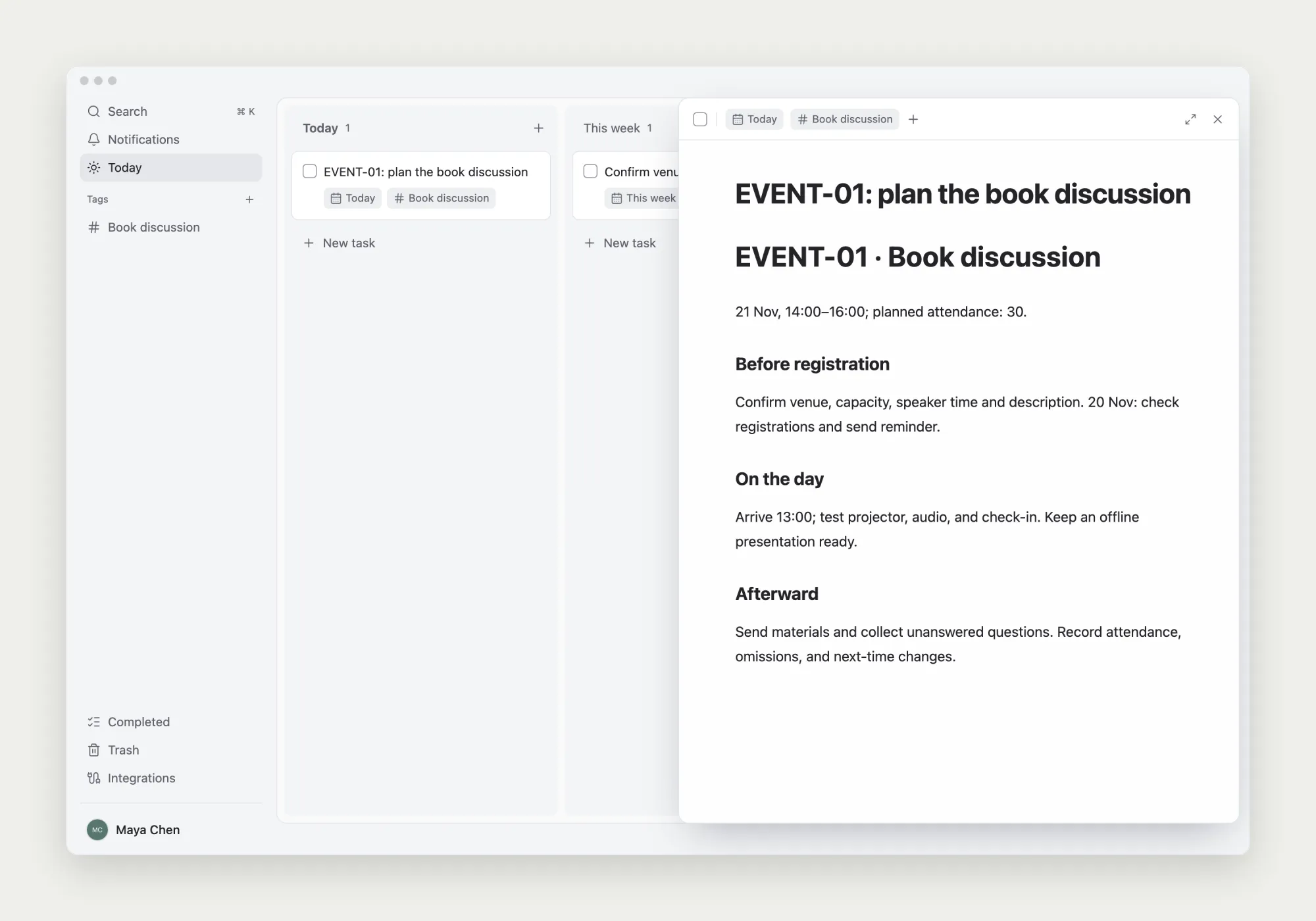
EVENT-01 is a book discussion on 21 November, 14:00–16:00, for a planned 30 people. Confirm venue, capacity, speaker availability, and description before publishing registration information.
The Asana event planning guide provides a basis for organizing tasks and reusing checklists. Adapt the actual items to the venue, attendance, and format of this event.
Work backward through the preparation
List venue confirmation, speaker materials, registration, equipment, and reminders separately. When publication depends on venue confirmation, write that condition down. If the venue changes, inspect the affected tasks and dates.
The organizer checks registration and sends a reminder on 20 November, then arrives at 13:00 on the day. Starting preparation and finishing it are different dates; scheduling everything on event day leaves little room to resolve missing inputs.
Make the on-site list useful under pressure
Check projection, audio, check-in position, and presentation availability. Save the on-site contact. An offline presentation is a prepared resource for lost connectivity, rather than an idea first raised when the network fails.
In TodoNote, organize the event with a parent task and subtasks, schedule preparation with dates, and keep contacts and confirmations in notes. Track your coordination actions and update affected dates when the plan changes.
Leave follow-up work open after the event
Sending materials, answering questions, and reviewing feedback have their own completion conditions. The event ending does not complete them. Keep the follow-up tasks open until the actions are done.
Event / date / location:
Purpose / planned attendance:
Capacity confirmed:
Venue / speaker / contacts:

Registration prerequisites:
Registration close / reminder:
Materials / equipment:
Arrival / start / finish times:
On-site checks / contingency:

Follow-up materials / questions:
Actual attendance / feedback:
Omissions / causes:
Changes for reuse:Record actual attendance, omissions, and reasons for changes. For the next event, extract a reusable procedure and recheck it against the new venue and audience size.