A project status report should say where a specific project stands as of a stated time, what changed, what is blocked, and what decision or action is needed next. Support each important claim with a milestone or source record.
“We are 80% done” can hide an unapproved deliverable. Readers need to know whether the remaining work is routine execution or a decision that could change the delivery date.
Start with the reporting boundary
State the project, reporting date, and next milestone before listing activity. Define any status label you use: for example, “at risk” means the target date depends on an unresolved approval. Use the same meaning in the next update.
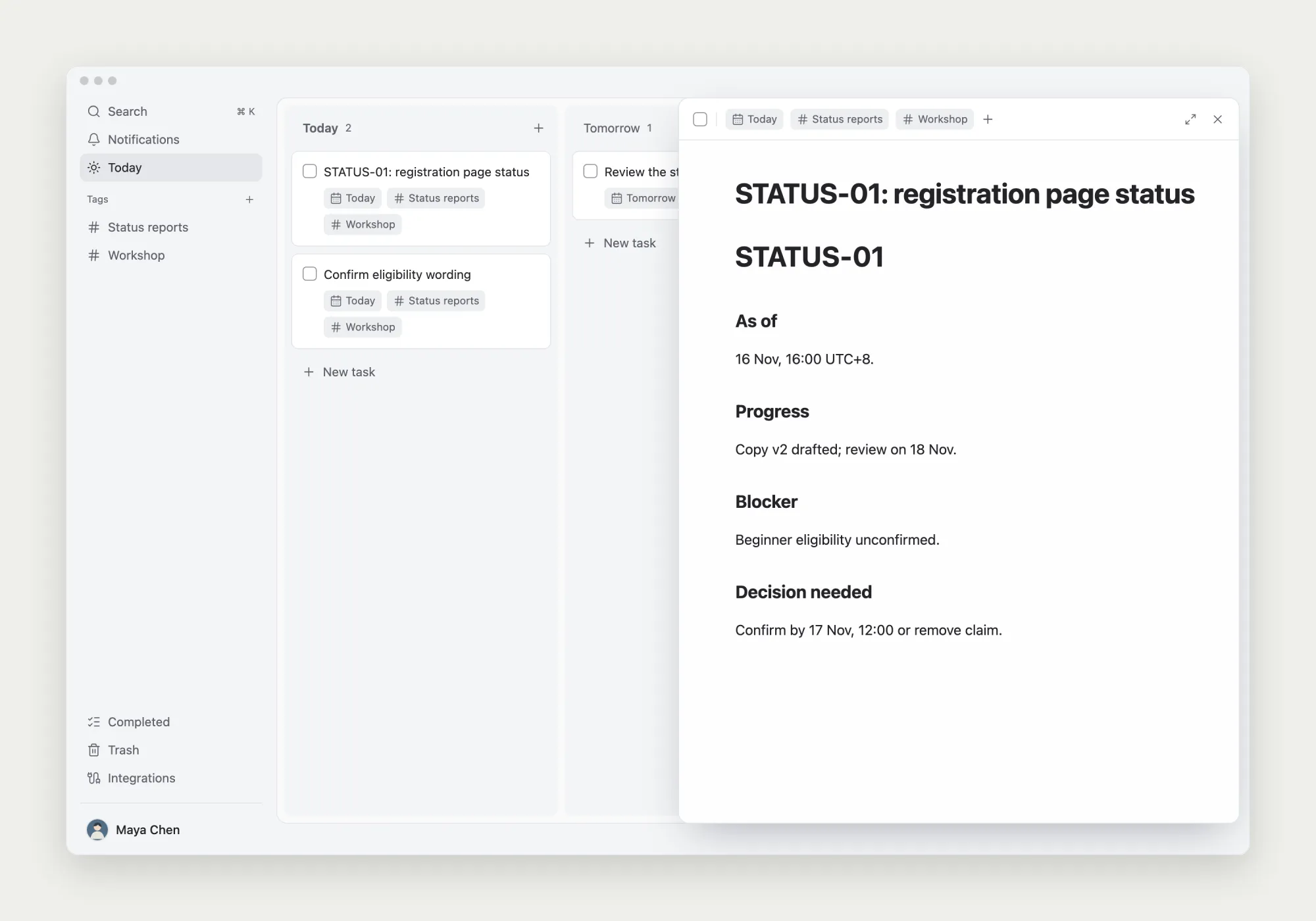
STATUS-01 covers a workshop registration page as of 16 November, 16:00. Copy v2 is drafted, but the beginner eligibility wording awaits confirmation. The review is planned for 18 November; publication has not been approved.
Replace activity lists with evidence
| Weak update | More useful statement | Supporting record |
|---|---|---|
| Copy finished | Copy v2 is ready for review | Draft version and review task |
| Waiting for feedback | Eligibility wording needs confirmation | Question and response checkpoint |
| Almost launched | Publication remains unapproved | Acceptance and approval record |
| On track | 18 November review remains feasible if reply arrives | Dependency and fallback |
Completed subtasks can support a progress statement, but a count is not a reliable percentage when subtasks have different sizes or acceptance conditions. Prefer a statement such as “draft ready for review; eligibility claim still unconfirmed.”
Keep a snapshot of what was known at the reporting time. If the approval arrives tomorrow, the next report can explain the change instead of silently rewriting the earlier forecast.
Make the requested decision easy to answer
Ask for a specific response by a specific checkpoint: confirm the eligibility wording by 17 November, 12:00, or approve removing the claim for this release. State the impact if no answer arrives. A vague “please advise” leaves both priority and ownership unclear.
In TodoNote, collect supporting task notes under the project tag and write the report in a dated task note. Add a subtask for the follow-up you control. Naming a person in a note records your coordination plan; it does not send them a request.
One-page project status template
Project:
Report as of / time zone:
Next milestone / target date:
Status / definition:
Changes since last report:
Completed deliverable / evidence:
Current blocker / impact:
Decision requested:
Decision contact / response checkpoint:
Fallback if unresolved:
Next action / planned date:
Next report / source records:Update when the assessment changes
Choose a reporting rhythm that matches the project. Between scheduled updates, record changes that alter the date, scope, or requested decision. Keep the evidence and the current conclusion close enough to review together.
Read next: How to write a weekly status report: results, blockers, and next steps
Sources and background: Atlassian