Before starting a task, state the deliverable, scope, checks, and evidence location. Completion should be something you can inspect. “Improve this” and “mostly finished” leave the final decision to interpretation.
Everyday task criteria differ from Scrum's Definition of Done. The Scrum Guide applies that term to the quality state of an Increment. Criteria specific to one piece of work do not replace a team's shared quality commitment.
Replace an activity with a result
“Organize user feedback” names an activity. “Consolidate signup findings from U01–U03, retaining sources, problems, and proposals for review” defines a result. Submitting a proposal still does not prove that it works.
Make the check repeatable by another person. Give numbers a counting rule, files a version, and screens an inspection path. If someone else's approval is required, specify who confirms what.
| Situation | Response | Record to keep |
|---|---|---|
| Organize feedback | Retain a source and problem for U01–U03 | Consolidated draft v1 |
| Check copy | Compare each label with actual behavior | Path, version, and result |
| Submit for review | Send a named version with open questions | Submission; acceptance separately |
A failed check keeps the work open
DONE-01 has a finished-looking feedback draft but lacks the source location for U03. The task remains open until that reference is supplied. Formatting the document does not remove the traceability requirement.
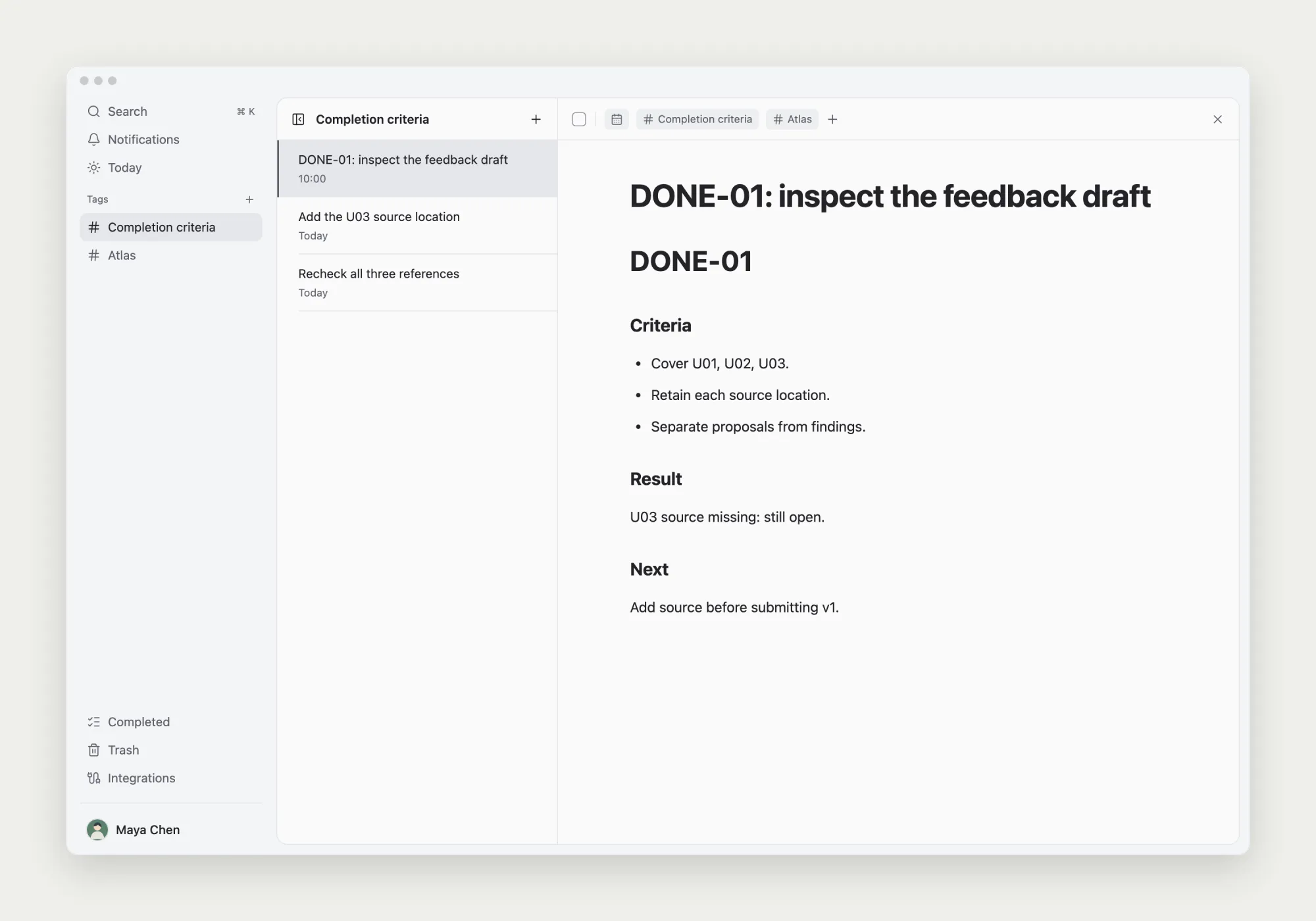
Match the checks to the work. A simple reply needs less inspection than material supporting a product decision. The purpose is to resolve uncertainty, not to maximize checklist length.
Separate omissions from added scope
If three interview sources were agreed, a missing source is unfinished original work. A later request for five more interviews is added scope that needs a fresh time and priority decision.
In TodoNote, write the criteria in the task note and separate independent checks into subtasks. Compare results before completion. Submission and another person's acceptance should remain distinct events.
Ask how you will check it
If you cannot describe a check, clarify the audience, purpose, or boundary first. That clarification can itself be the next action before you commit to delivery.
Retain omissions that caused rework and reuse the lesson for similar tasks. Final project acceptance still needs its own broader review; one completed subtask cannot stand in for it.
A template to copy
Task and purpose:
Deliverable and version:
Included scope:
Excluded scope:

Completion checks:
Inspection method:
Results and evidence locations:
Who must confirm what:
Failed checks:
Added scope and decision:Related workflow: Project acceptance checklist template: deliverables, criteria and results
Sources and background: Scrum Guide