A useful first-30-days plan follows work you can gradually perform: gain access, learn through a small assignment, and complete a defined deliverable with feedback. Save the answers you ask for beside the task that needs them, including their source and any remaining uncertainty.
New information arrives in conversations, meetings, documents, and practical attempts. A link alone may not tell you which part matters. Add the question it answered and where that answer applies, so the next visit has a purpose.
Week one: find the entry points
Turn environment setup and access requests into concrete tasks. Record where you applied, current status, and who can clarify the next step. Schedule a follow-up for anything waiting on someone else.
Choose learning materials from the work ahead. Preparing a customer Q&A calls for the current feature handbook, previous questions, and the person who can approve commitments. Each document now has an immediate use.
Make an answer usable twice
After asking a colleague, write the question, your understanding, the source, and any boundary you still need to confirm. A useful personal tip is not automatically a permanent team rule.
Keep an accessible link to the official document and describe what it resolves. When it changes, you can return to the source. Personal notes help you understand the work; team documentation remains the basis for shared agreements.
Weeks two and three: finish something small
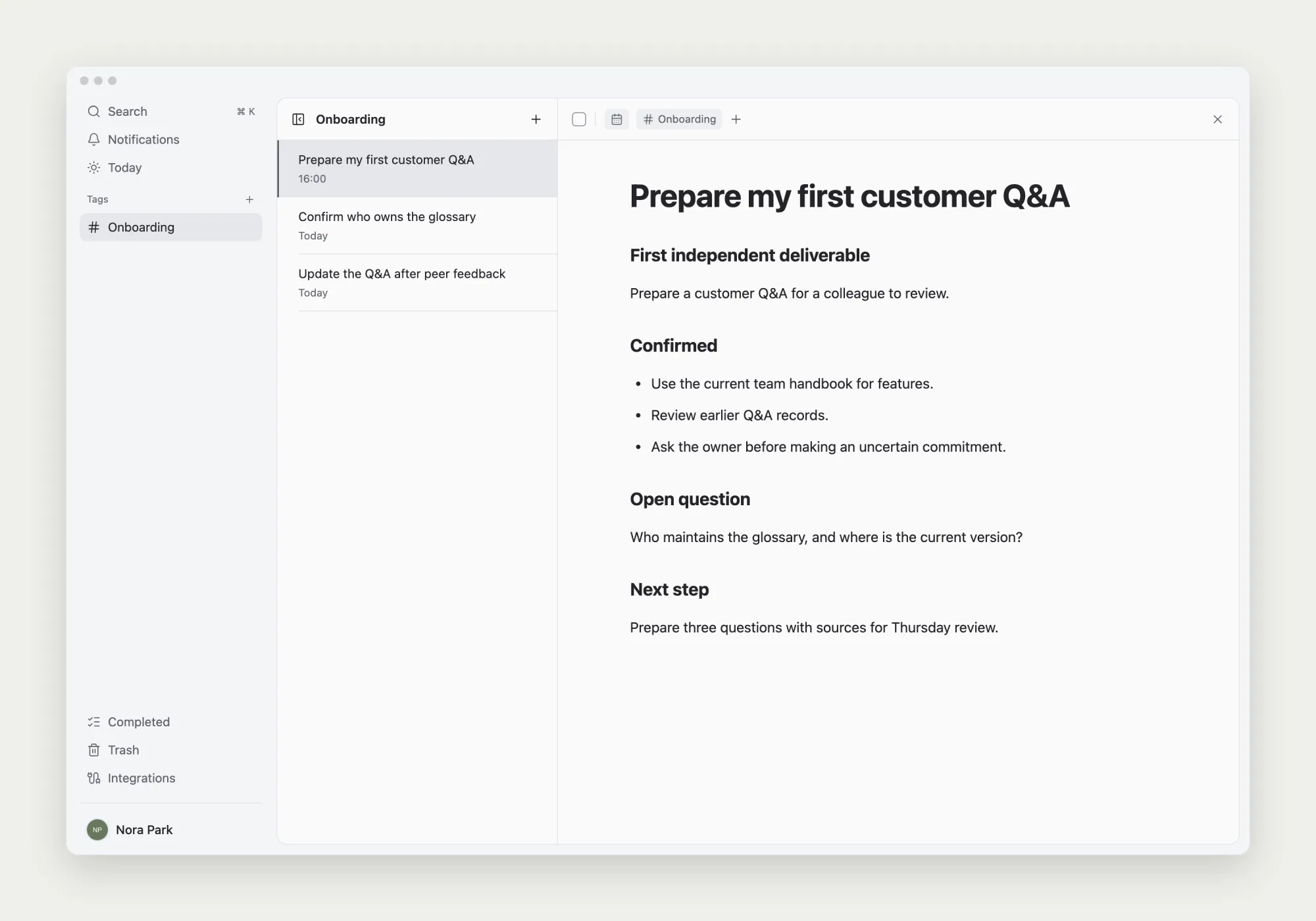
For the first customer Q&A, agree on a scope: explain three released features and make no independent promises about future dates. Prepare the questions and supporting references, then ask a colleague to review them.
Keep feedback in the task: which explanation was unclear, which source had changed, and what to check first next time. “Improve business knowledge” becomes more actionable when it names an actual correction.
Day 30: discuss what you can do independently
Sort your experience into work you can complete alone, work needing support, and work not yet attempted. Bring a task or concrete question for each category to your manager. Thirty days is a review point; the pace depends on the role and team.
In TodoNote, an Onboarding tag gathers this stage of work. Add business-topic tags where useful, so enduring notes remain findable after onboarding ends. There is no need to recopy every answer into a new system.
A record for one question
Work I am trying to complete:
Specific question:

Answer / source / date:
My understanding:
Where it applies:
Boundary still to confirm:

Small task to try:
Reviewer / review date:
Feedback received:
Changes made:
Next question:Keep revising your understanding as you use it. The notes also supply specific topics for a manager conversation; see preparing a one-on-one for a structure.