For a feature-level competitive analysis, give each tool the same task, equivalent data, and the same success criteria. Document what happened, preserve evidence, and draw a conclusion only for the scenario you tested.
Specify what finishing the task means
Suppose the question is how someone can take their work records when leaving a tool. Build three equivalent tasks across three products, including dates, notes, and one attachment.
Separate successful downloading from successful retrieval of the required information. Keep the test date, platform, and subscription plan beside each record so the conditions can be reproduced.
Record what happened before interpreting it
If tool A downloads a spreadsheet containing task names and dates, record that observation. Open the file to check whether notes are included, then test whether the original attachment is available and how it maps to the task.
In TodoNote, use one task per product, with a common topic tag. Keep steps, screenshots, and links to sample exports in its note. Leave any untested conditions as subtasks.
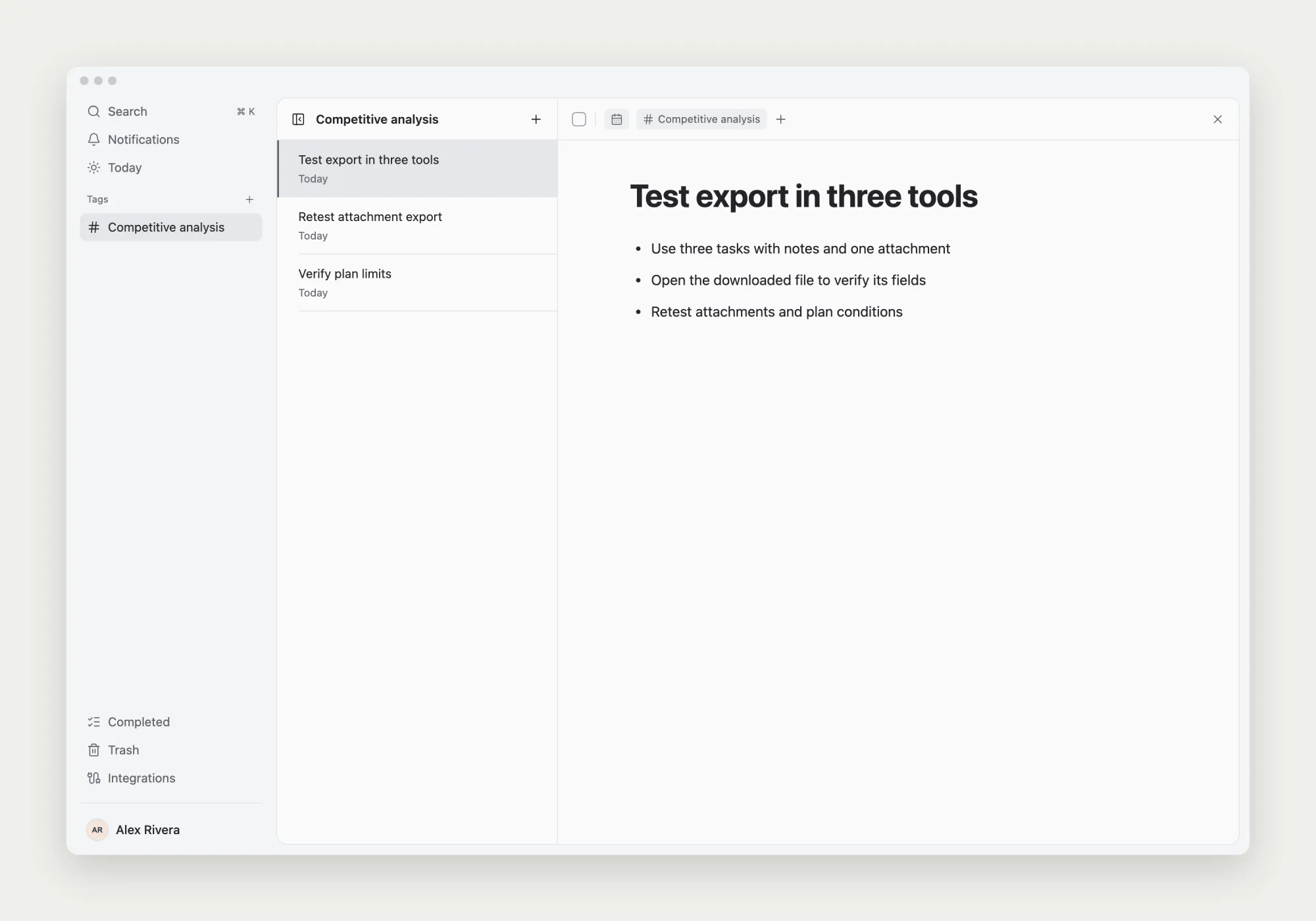
Translate evidence into one product decision
A result can be as narrow as “the spreadsheet covers titles and dates under this plan.” Keep the unresolved note and attachment tests visible instead of grouping the entire feature under a single yes or no.
For a design follow-up, add a clear export scope to your prototype, then ask a participant to predict which fields they will get from the same three tasks.
Include sample size or plan restrictions in any conclusion that depends on them. The detail makes a future retest easier to interpret.
Copyable competitive feature test
Product decision this test informs:
User task and success conditions:
Common test data:
Tool, version, date, and plan:
Steps and observed result:
Screenshot, file, or way to reproduce:
Open questions and retest plan:
Conclusion and supporting evidence:Related workflow · How to review AI-generated work before you deliver it: a practical checklist